This is a tribute to a record label that still creates a real buzz to DJs today. For many house-music addicts Peacefrog Records, named after a golden tune from the psychedelic blues-rock band, The Doors*, is an incredibly well respected record label. This independent London-based label, started by Pete Hutchison and Paul Ballard, did not only release electronic music. They evolved towards a very eclectic and progressive label with releases that can be labelled as techno, house and even indie and folk music. In 1992, after the Lodger 303 EP release, Ballard withdrew from Peacefrog Records, which made Hutchison the only caretaker of this label.
Hutchison, a willowy man with long hair and a gratifyingly bushy beard is every inch the obsessive audiophile. In an interview from 2013 he told The Guardian that in a single year he spent £40,000 just on buying classical music. And he was not counting all the other music he was buying. One purchase that year was a rare box of Mozart recordings from 1956, which set him back £7,000. This interest in classical music made him found the Electronic Recording Company to repress decades-old records using authentic procedures.
After the millennium, the rise in digital music made Peacefrog began to offer CDs and digital downloads. Nevertheless they never let go of their vinyl. In this period they expanded their genres with avant-rock, bossa nova, incorporating folk, indie and new wave. The label has received mainstream notice lately since it signed the Argentinian-Swedish folk artist José Gonzales and Swedish electronic group Little Dragon, both of whom have had top 10 singles. José Gonzalez’s songs also appeared in different commercial and television shows such as Scrubs, House, Bones and so many more.
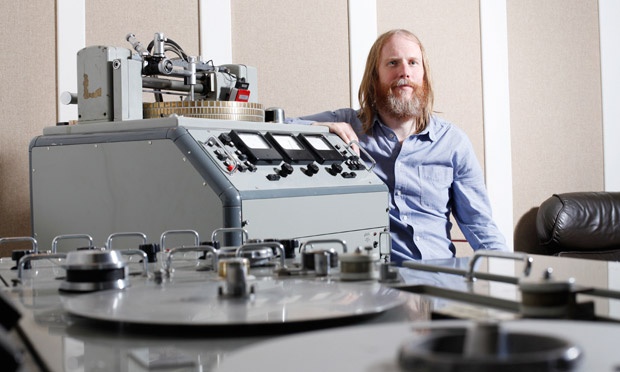
We could arrange an interview with Pete Hutchison talking about how he started, the nineties and why he changed to a more diverse record label:
Hi Pete, nice to meet you! Can you tell us a bit about the beginnings of Peacefrog Records? How did you start your journey?
Around 1989/90 I was unemployed and I was DJ’ing. A friend and I were busy producing. We released our first record on a white label and then I started on a couple of my own productions for Peacefrog, which were highly influenced by acid house. After a while, I decided to sign artists rather than doing my own productions. The first artist was Luke Slater. I heard one of his productions on the radio, on a pirate station. This made me decide that it was better to let other people produce, because I felt that my productions weren’t as good as someone like Luke.
You had the Kiss radio station with Colin Dale, who was playing a lot of good stuff. I frequently dug for records at Fat Cat Records in central London and I was buying a lot of imports from Detroit and Chicago. I really liked the music from there. That is why I signed so many producers from that part of the world during that period.
What was your vision in the 90’s? Were you expecting any success with artists such as Luke Slater/Planetary Assault Systems, Daniel Bell, Wyndell Long etc., who were still at the beginning of their musical career?
I just liked the music; I was just a big fan really. I only operated from my little house, literally in my bedroom. I didn’t sign these artists for financial success, but for their music. I used to go clubbing 3 times a week and I enjoyed the music and I wanted to work with the artists who I thought were the most talented.
I read somewhere that the name Peacefrog comes from a song by The Doors. Is this true? And why?
That is correct! A friend and I decided to cover a Doors record called ‘Peace Frog’. We took the track and started to put some beats behind it*. That was the record we first released on white label. We couldn’t think of another name, so it was convenient for us to call it Peacefrog. The techno-band Holy Ghosts designed the logo with my friend.
As a label-owner, what do you think about the second-hand market where prices of Peacefrog records go up to more than 50 pounds?
I didn’t know they do. Well, I’m guessing that people hear them and like them and there aren’t many around anymore. People have to pay these prices if they really want it, I guess.
Are you planning any represses of some 90s electronic music releases on vinyl?
We did some represses for our 20th anniversary, very limited amount, some colour vinyl. The label is diversified now, so we are not concentrating on that music anymore, but we are looking at it and maybe one day we will do some represses, we’ll see.
How did you manage the transition of music releases on digital platforms?
Well, we loaded everything to iTunes and Beatport. We made concerted efforts to try to make the whole catalogue available digitally; I think most of it is probably, apart from the things that got lost. Some records we can’t even find anymore.
Since the beginning of the 2000s, the record label changed to a more eclectic range of music releases with artists such as José Gonzales and Little Dragon. What was your incentive for this change?
Just boredom… Hearing artists that were making the same records as we put out but not as good and finding that the quality was decreasing. It wasn’t exciting anymore. The sound became very generic. I always had a very eclectic personal music taste. It just felt like it was not as progressive as it should be, we needed to look at a different kind of music.
Do you have an all-time favourite release on Peacefrog Records?
My all-time favourite is Matt Coggers – ‘Mind you don’t trip’, which we put on the release ‘Sonar 123’. It is a fantastic record and a fantastic guy, but he sadly died last Christmas. That track is so forward thinking and crazy. To me that is what techno is all about. It’s about pushing boundaries and freestyle.
What do you think about the electronic music scene today? To what extent has the landscape changed compared to what it was like the day you first started?
I don’t follow the electronic dance music scene anymore. It is probably not fair for me to give an opinion about this, but we do get sent stuff from artists. I don’t like the fact that everybody stopped using drummachines and that people are making everything with their computer. Where is the skill in making music now? It was a lot harder to program an 808 or a 909 really effectively, back then, you really had to be talented. Now it is just edits and samples…
If you went into a record shop in the beginning of the nineties, you heard Juan Atkins, Derrick May, Underground Resistance. You had never heard anything like that in your life. You went to a rave and people said: “This isn’t music”. It was so revolutionary. Every week a record came out that completely blew you away. It was so exciting, but today, for me it is not exciting anymore.
Can you tell me something about your new record label: Electric Recording Company?
We’ve had a mastering studio for ten years now and I am a big collector of jazz and classical music of the late 50s, early 60s. I managed to make a deal with EMI records to get the original master tapes, but I wanted to recut the records using the equipment that was used back in the day. None of the studios would have this equipment. So we collected this equipment and restored it and then recut the track from the original takes in mono using this original equipment.
We made the sleeves the same way as in that time. It is a very difficult and time-consuming process, but it is quiet fulfilling. It’s also pretty expensive.
Thank you for this chat and good luck with both of the labels and let’s hope there will be some cheaper represses of some golden nineties tunes.
CONTEMPORARY VALUE
The value of Peacefrog for many dance-music enthusiasts nowadays is of big importance. Greenhorns, younger people in their twenties, experienced ravers or just house-music lovers of all ages came in contact with some of the classic EPs and albums Peacefrog has released in the nineties. Many house-music releases of this label became instant classics, very much wanted by collectors and DJs.
Take for example 'Atmosfaer' this amazing Glenn Underground album contains some true gems and has been sold for more than £40 each on the second-hand market nowadays. Taking into consideration the time, around 1996, the album was produced in, it had a very futuristic sound. Many tracks from Atmosfaer are still being mixed today by outstanding DJs. Glenn pioneered this particular sound, which has also inspired a lot of current house producers and it contains everything from dreamy jazz-inspired house to hand-raising, booty-shaking Chicago house.
Another house classic is a 5-track-containing EP from Wyndell Long released in 1995 with two tracks that are really exquisite: 'She'and 'Asphasia'. This was the first ever release of Wyndell Long and it started of his career as a house and techno DJ.
Spencer Kincey’s amazing alias Gemini also released a stunning album: 'In And Out Of Fog And Lights'. Today this is still a highly regarded vinyl for every house music-enthusiast with several deep house gems. Kinsey, one of the most prolific and innovative producers of the nineties, is one of the artists that every house music enthusiast worships.
The Advent about DBX – 'Losing Control': “I heard this record for the 1st time mid 90's and that hypnotic vocal 'Losing Control' of Dan Bells classic release was one of the 1st records to open a lot doors for new possible directions for music, it was simple and very effective. Plus, that detuned filtered vocal was very trippy indeed”.
There appeared too many good EP’s and albums to mention here, but als Ron Trent, Paul Johnson, Wamdue Kids and many more released with stunning music on this awesome label.
For more Meoko: