Every raver has been there. You’re at the party surrounded by all of your favourite people, getting all sweaty and wide-eyed, dancing your arses off to the most amazing DJ, the music is so good it’s almost transcendent … and then a virtual congregation of guys (and it’s usually men) stand stock still in front of the decks, holding their iPhones aloft with an almost religious fervour, trying to video their new favourite DJ for the next half an hour. Didn’t anyone tell them they are here to dance?
In the early days of electronic music, cameras were a rarity, probably because that bulky Nikon was never going to fit into your pocket or handbag, and social media didn’t exist. Even our best loved clubs here in London took a dim view of cameras on the dancefloor, as Shealan Forshaw, aka the DJ Phatplastic explains:
“My second ever experience at fabric was having my digital camera taken off me on the dance floor in 2002. I got it back but the images had been deleted. Fast forward a year and I was working at the club myself … and it was clear the feeling towards cameras was less a hatred of technology and more to do with keeping a mystique about the venue, ensuring clubbers could be comfortable letting loose and enjoying themselves without concern of being ‘papped’ by a random with a Canon. Time moves fast, but technology moves faster. Within a few years camera phones had become ubiquitous and there was nothing to do but embrace it.”
Photo taken by Nick Ensing.Suddenly we were all photographers, and the explosion of social media, and its benefits as a promotional tool were strikingly obvious even the most awful jerky videos on YouTube, Twitter and Facebook were a free promotional tool for parties that just might persuade someone to buy a ticket for the next event. But has this gone too far and started to kill what a party should be about? Beth Marsh, aka Daddys Got Sweets, a club photographer working at some of best underground nights in London, thinks so:
“I'm all for capturing a moment, a glimpse into something magical, but mobile videos and posed photos are the antithesis of that. We've all been there, enjoying an exceptional night when out hands twinge to get out our camera phones so that we can remember the moment forever. But those videos rarely get watched again and when they do the bass is muffled, the lighting is dark and the only possible use they can have is to say 'Look, I was there’. The same goes for an excessive amount of narcissistic selfies.”
Photo taken by Nick EnsingClub photography as a profession has become increasingly common in recent years. It’s a great promotional tool for clubs, especially those nights that have a more artistic, creative bent, as these images can be seen as an aesthetic extension of the party itself. As well as these photographs potentially being pieces of art themselves, they are also a freeze-frame of history, as club photographer, Nick Ensing, explains:
“When I am working in a club and for me it is work as well as pleasure I know I am the least important person in the room less important than the artists, the dancers, the bar staff, the security, the lighting people. But I still believe there is something important about what I do. A very, very small amount of my photos I regard as high art … but most of what I do is documentary, a type of photojournalism. This thing people dancing to music in warehouses and clubs is a thing we all enjoy so much and has a history that is worth preserving. There is not much photography from 1988 etc Dave Swindells is one of the few who did at the time. My desire is to try to record the history of something that is important to me."
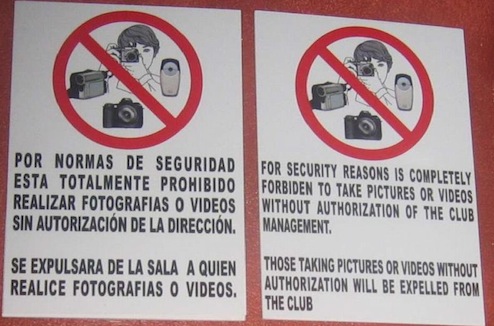
This is a very valid point, as most of us have parties, or whole years of our lives, that stick out in our minds as something beautiful and culturally valid. Our memories are probably fairly, ahem, hazy, and it can be wonderful to see these moments documented. This is something that certain clubs and scenes elsewhere in Europe will probably miss out on. Trouw in Amsterdam has introduced a no camera policy for the last year of its existence, and many Berlin clubs, most famously Panorama Bar, have a strict ban on photos being taken. Berlin based DJ and producer, Maik Yells, explains the rationale behind this:
“The Berlin scene still has this squat party feeling from when the wall came down, and people used to go around trying find places to break in and have endless raves in massive empty buildings, like Tresor. As the Tresor founder said, people come to parties for a kind of therapy, to escape from the pressures and fashions of everyday life, to enjoy the special atmosphere, to get lost in dark rooms and do whatever they want. I think, nowadays, many clubs like Panorama, Watergate, Sisyphos, etc, they want to preserve their culture from the outside world and have that freedom from Facebook tags, so there are no cameras allowed. They also warn you that if they catch you taking pictures with smart phones you will be kicked out. I think is a good way to keep things underground as Panorama bar and many other clubs in Berlin have become a tourist target, they don’t want this type of promotion, and also maybe not knowing what is happening inside will make things more special.”
It’s certainly true that parties in Berlin feel a lot freer than those in London, and this is partly to do with the lack of cameras. Photography can inhibit our ability to submerse ourselves in the music and to truly be free from what lies outside the club doors.
But what about the DJ’s perspective on cameras in clubs? Whilst Maik Yellsis happy to be in a mainly camera free Berlin, as he feels that “smartphones are the worst for killing the vibe on the dancefloor”, Shealan (Phatplastic) takes a more pragmatic view:
“These days I perform myself and I have no problem with people taking photos or video. It's a compliment. Like with everything else in life it comes down to the basic ‘don't be a dick’ rule. Don't block other people's view. The person behind you paid to be there, your iPhone (or god forbid!) iPad didn't. Don't get in the way and don't trigger your flash in my eyes every 10 seconds. I can't keep playing music if I'm on the floor of the booth having a seizure!”
But what about us, the people who go to these parties? How do we feel about cameras and videos in clubs? In a highly unscientific straw poll of about 20 veteran ravers, nearly everyone felt expressed a deep dislike for people videoing DJs and friends at parties, as they felt it killed the atmosphere and was just really annoying. As one person bluntly stated:
“Those fuckers with the phones with super halogen spotlights? They should be out joining search and rescue parties, not at dance parties in a club.”
Photo taken by Daddy's Got SweetsQuite. Views about club photography were generally positive, as long as it wasn’t too intrusive. Problems with Facebook was something a lot of people mentioned. Not many people want their Mum or their boss to see pictures of them online, gurning, cross-eyed and/or slobbering down some random person’s face. Worryingly, some women reported having upskirt shots taken of them. But the main idea expressed was that these people constantly filming and taking pictures are missing the point. People should go to parties for the music, the people, the atmosphere, the sense of unity on a dancefloor, not a six hour photo opp. Maybe some of us are forgetting the real reason we go out in the first place, and potentially spoiling it for others in the process. Club photographer, Beth Marsh, sums it up succinctly:
“As a club photographer I'd be shooting myself in the foot if I were to say I think banning photos in clubs was the way forward, I do, however, think people need to relax more, immerse themselves in the music instead of their mobile phone, focus on their friends emotionally instead of freezing time and posting selfies, trout pouts and peace signs. Nothing is more beautiful that a genuine smile, no amount of posing can perfect that.”
Photo taken by Daddy's Got SweetsWritten by : Peggy Whitfield
Pictures by: Daddy's Got Sweets, Nick Ensing